The FDA has cleared Elon Musk's brain-implant company to launch "LINK," the study that could decide whether a chip in the skull becomes real medicine. Here's what it means, who can sign up, and why the experts are urging caution.
For years it sounded like science fiction: a coin-sized computer tucked under the skull, reading a person's thoughts and turning them into clicks, keystrokes and even spoken words. This week, that idea took its biggest step yet toward the doctor's office.
Neuralink, the brain-computer interface company co-founded by Elon Musk, announced on Tuesday, November 25, that it has received approval from the U.S. Food and Drug Administration to launch a trial it calls LINK — which the company describes as "the first pivotal trial for an implantable brain-computer interface in the US." And the first people invited to take part are adults living with amyotrophic lateral sclerosis, the cruel, progressive disease better known as ALS or Lou Gehrig's disease.
"This builds off of our work with 30+ participants with Neuralink to date," the company wrote in its announcement on X. Its message to patients was blunt and short: "Those with ALS may be eligible." It is a milestone that patients, families and rivals have been waiting for. But it is also, crucially, a starting gun, not a finish line.
Why "Pivotal" Is the Word That Matters
In the world of medical devices, not every trial is created equal. The early studies Neuralink has run since 2024 were "feasibility" studies — small, cautious experiments designed mainly to answer one question: is this safe enough to keep testing?
A pivotal trial is different. It is the larger, more rigorous study that a company generally needs before it can ask regulators to let a device onto the market. In other words, LINK is the kind of study whose results could eventually determine whether a brain implant moves from a handful of research volunteers to ordinary patients.
According to the company, LINK will evaluate how well participants can control digital devices using only their thoughts, "with a focus on functional outcomes that improve independence in daily life." Reports from Engadget say the study will also assess the long-term safety and reliability of the implant, and coverage of the announcement indicates it will run across multiple clinical sites in the United States.
Engadget described the FDA's authorization as granted on an experimental basis, allowing Neuralink to recruit participants and carry out the study under an approved clinical protocol. If the device proves safe and effective, the trial could pave the way for more advanced studies and, eventually, a commercial product.
What Neuralink has not said is just as important. The company has not publicly disclosed how many people it plans to enroll, the full eligibility rules beyond an ALS diagnosis, the list of hospitals involved, or a completion date. An independent analysis by the research body CASRAI noted that the trial's registry number did not appear on Neuralink's trial pages at the time of the announcement.
The Device: A Robot Surgeon and a Chip Full of Threads
At the heart of the trial is the N1 implant, a small sealed device that sits in the skull. It is placed by Neuralink's R1 surgical robot, which threads ultra-fine, flexible electrodes into the brain tissue — strands far thinner than a human hair — so the chip can listen in on the electrical chatter of neurons.
Those signals are sent wirelessly to a computer, where software learns to translate a person's intended movements into actions on a screen: moving a cursor, typing, browsing the web, playing games. For someone whose muscles no longer obey them, that can mean the difference between silence and conversation.
The device remains investigational. It is not approved for general medical use, and the FDA's decision to allow a trial is not a verdict that the implant works.
From One Brave Volunteer to "30+" Participants
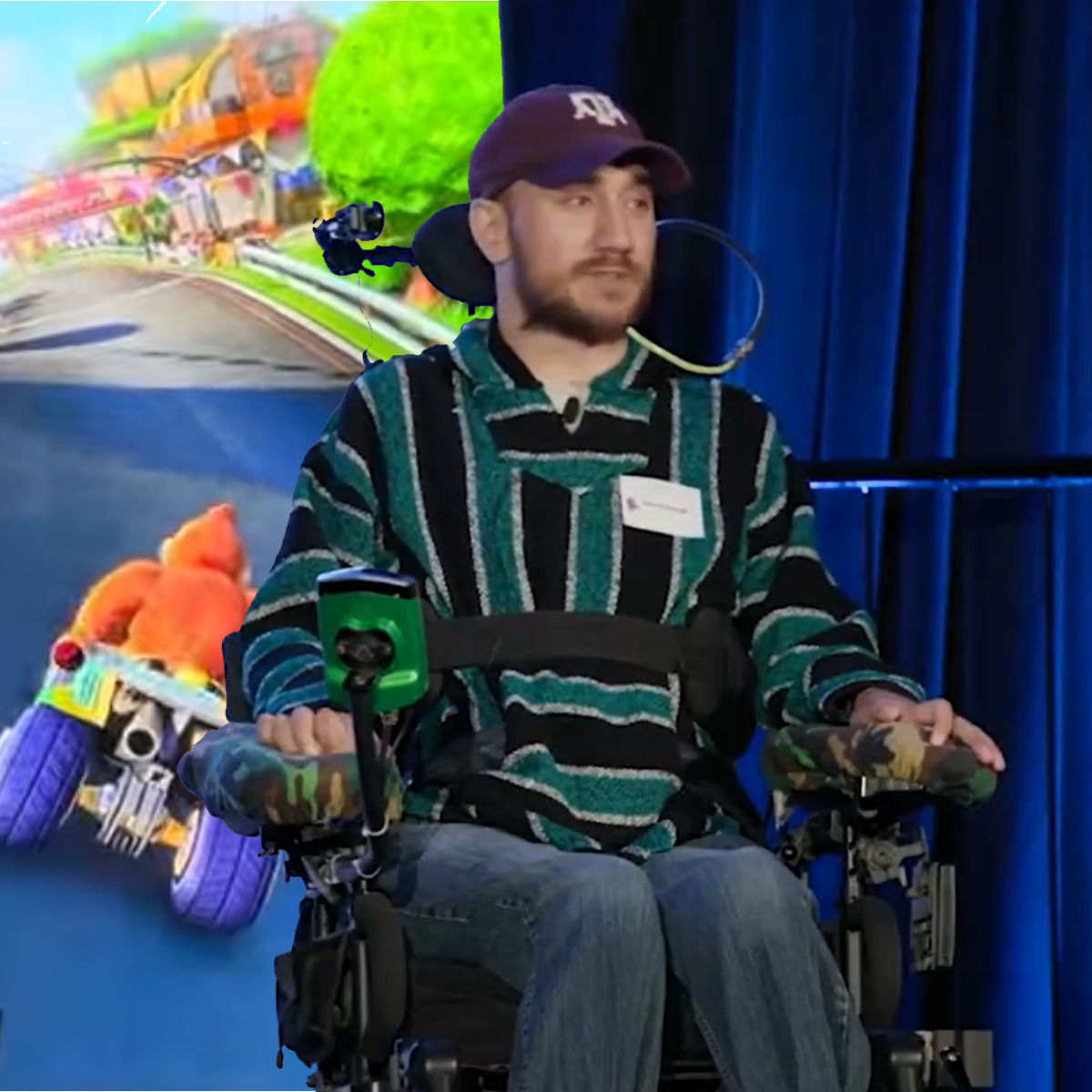
Neuralink's journey into human brains began in January 2024, when the first participant was implanted under its PRIME study. That first patient, a man paralyzed below the shoulders, quickly learned to move a cursor and play chess using his thoughts — though the company later acknowledged major technical problems, including electrode threads retracting from his brain. He has said he has no regrets.
From there, the program expanded. Health Canada approved a Canadian arm, CAN-PRIME, in November 2024. A study called CONVOY began exploring whether participants could control an assistive robotic arm. In July 2025, GB-PRIME launched at two sites in Great Britain. Across these early studies, the company now counts more than 30 people who have received implants.
One of them, Bradford Smith, became known as the first person with ALS to communicate using brain signals alone. In comments reported at the time of that 2025 milestone, he said Neuralink "has given me freedom, hope, and faster communication."
The Moment That Went Viral: "Hello World"
The excitement around LINK did not come out of nowhere. In September 2026, Neuralink released a video of a participant named Terry, the third volunteer in a speech-focused effort it calls VOICE. Terry has bulbar-onset ALS, a form of the disease that strikes the muscles of speech and swallowing first.
According to reports, his implant carries 3,000 recording channels placed over the brain's speech motor region. His first words through the decoder were "hello world." Then: "Hello, how are you doing today?" The clip racked up more than 6 million views. Reports said the system used an AI voice to speak in a version of Terry's own voice.
Around the same time, another participant, Kenneth Shock, was reported to have told his wife "I love you" through the system.
Then, on October 28, Neuralink posted its boldest claim yet: "We are enabling speech to text and voice at conversational rates in participants with ALS." The company said one unnamed participant reached 75 words per minute in their first week, with a 5.8% word error rate across a 125,000-word vocabulary.
For context, everyday conversation typically runs somewhere around 120 to 160 words per minute, and many people with advanced ALS rely on eye-tracking systems that can be painfully slow. A rate of 75 words per minute would be a dramatic leap.
But there is a catch. That figure came from Neuralink alone. It was not peer reviewed, the participant was not named, and the company did not say how many people are in its speech group. Reporting from TeslaNorth noted there was no accompanying blog post or technical paper.

The Competition: Neuralink Isn't Alone
Neuralink grabs the headlines, but it is far from the only player — and some rivals have published striking results in medical journals. In June 2026, a team at UC Davis Health published results in Nature Medicine on Casey Harrell, a 47-year-old man with ALS who was implanted in 2023 by neurosurgeon David Brandman. Using four microelectrode arrays recording from 256 electrodes, Harrell used his system for more than 3,800 hours over two years — an average of over five hours a day. He produced nearly 2 million words at an average of 56 words per minute, with over 99% word accuracy in controlled testing on a 125,000-word vocabulary. In everyday use, he rated 92% of his sentences as accurate or mostly accurate.
Perhaps most remarkably, the system is run by Harrell's home care team without researchers present, and he has returned to full-time work as an environmental advocate. Brandman told The Register the key point was "enabling everyday communication." Harrell himself, speaking through the device, said he wants "desperately to not be unique or special."
Meanwhile, Paradromics is pursuing its own U.S. trials, and Synchron has taken a radically different approach, threading its device up through the jugular vein to avoid opening the skull. Gizmodo reported that Synchron's early trials were recently paused over performance issues. And observers note that China's more permissive regulatory climate appears to be moving brain-computer interfaces toward commercialization faster than in the West.
Expert Perspective: Hope, With the Brakes On
For neuroscientists and ethicists, the LINK approval is real progress — but they are quick to separate permission from proof.
CASRAI's independent analysis put it plainly: FDA authorization to run a trial is not evidence that the device works, and no outcome data from LINK has been reported. The body also pointed out that the trial is being promoted through Neuralink's own patient registry, and that any outside predictions about enrollment numbers or how big the benefit will be are, for now, speculation.
There is also Neuralink's history to consider. The company has faced scrutiny over its animal research, including a federal probe reported by Reuters in 2022 and internal employee backlash over how tests were conducted. Critics argue those episodes make transparency in human trials all the more important.
Researchers in the field have long stressed several questions that a pivotal trial must answer: How long do implants keep working before signals fade? What happens if a device fails or must be removed? How do patients cope with surgery risks such as infection or bleeding? And who pays when — or if — the technology reaches the market?
The UC Davis team's own paper carried a sober caveat: its results come from a single patient, and how well they generalize to others is unknown. The same is true, so far, of most public speech results in the field.
What This Means for You
If you or someone you love is living with ALS, this is the most practical part of the story. Neuralink says enrollment for LINK is open, and its trial page lists the study as recruiting adults with ALS in the United States. Interested patients can register through the company's patient portal at portal.neuralink.com.
Before signing up, experts generally recommend a few steps:
- Talk to your neurologist or ALS clinic team first. They can help you weigh surgical risks against potential benefits and check whether other trials — including non-Neuralink studies — might fit better.
- Ask hard questions. What are the eligibility rules? How many visits are required, and where? What happens to the implant after the study ends? Who covers costs and travel? What support is available if the device stops working?
- Search ClinicalTrials.gov for brain-computer interface studies near you. A separate early feasibility study of the N1 system in spinal cord injury, ALS and stroke has also been listed there, according to CASRAI, along with trials from other companies and academic centers.
- Remember that a trial is research, not treatment. Participants are volunteers helping to answer open questions, and there is no guarantee of benefit.
For the roughly 30,000 Americans estimated to be living with ALS at any given time, the stakes could hardly be higher. The disease steadily robs people of movement, speech and, eventually, breathing. There is no cure. Anything that preserves the ability to communicate — to say "I love you," to ask for help, to keep working — is precious.
The Bottom Line
Neuralink's LINK trial marks a genuine turning point for brain-computer interfaces in the United States: the first time, by the company's account, that an implanted device of this kind has been cleared for the large-scale study needed to reach patients.
But the real test starts now. Over the coming months and years, LINK will have to show in hard numbers — under the watchful eye of regulators and independent scientists — that a chip in the brain is safe, durable and life-changing for more than a lucky few.
Until then, the viral videos and the eye-popping words-per-minute claims remain just that: promises. For people with ALS racing against time, the hope is that this trial finally turns those promises into proof.
Sources: Neuralink announcement on X (Nov 25, 2026); Gizmodo (Mike Pearl, Nov 26, 2026); Engadget (Steve Dent, Nov 26, 2026); CASRAI news analysis (Nov 26, 2026); TeslaNorth (Oct 28, 2026); iPhone in Canada (Sept 21, 2026); The Next Web on UC Davis/Nature Medicine (June 16, 2026).
Published By | Features Editor