NAIROBI
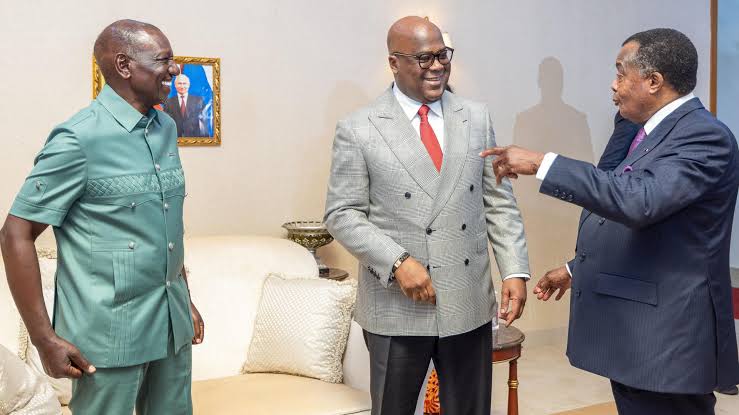
Kenyan President William Ruto and Congolese President Félix Tshisekedi have agreed to restore full diplomatic relations, including ambassador-level representation, after talks in the northern Republic of Congo town of Oyo that were brokered by the African Union's mediator for the eastern Congo crisis.
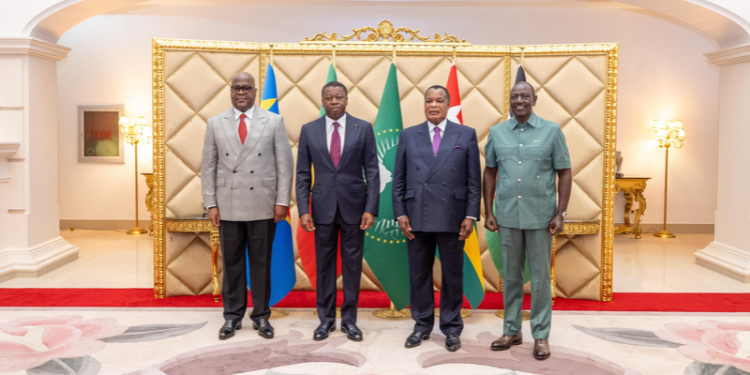
The agreement, reached Sunday, Nov. 22, at what organizers called a Quadripartite Political Summit, is the clearest attempt in nearly three years to repair a relationship damaged by Kinshasa's accusation that Nairobi had sided with Rwanda and given a platform to Congolese rebels. It matters beyond the two capitals. Kenya is a gateway for goods bound for eastern Congo and a leading voice in the East African Community, while Congo is fighting a rebellion that U.S.- and Qatar-brokered peace processes have so far failed to end.
What was agreed
Republic of Congo President Denis Sassou N'Guesso hosted the meeting, and Togolese President Faure Gnassingbé took part as the African Union's mediator in the eastern Democratic Republic of Congo crisis. The talks lasted more than two hours, according to Radio France Internationale, as cited by Africanews.
According to Citizen Digital and KT Press, the two leaders agreed to "work to restore full diplomatic relations and strengthen cooperation between the two countries." Their commitments include restoring ambassador-level representation, holding regular political consultations and resuming the Kenya-DRC Joint Grand Commission for Cooperation. They also pledged to expand cooperation in trade, investment, security, politics and culture, and to work together on regional peace and integration through the East African Community and the International Conference on the Great Lakes Region.
A joint statement quoted by Africanews said the two presidents would prioritize "diplomatic channels" to address "shared concerns and for the peaceful resolution of any potential disputes," and pledged cooperation "within regional mechanisms responsible for issues of peace, security, and integration." The statement also called for "cooperation among countries to eradicate" the Ebola epidemic now affecting Congo.
Ruto said the leaders had agreed to "open a new chapter in relations based on mutual trust, respect and cooperation," KT Press reported. "Our engagement will be guided by dialogue, mutual respect and the peaceful resolution of differences," he wrote on X. The Congolese presidency said both sides reaffirmed the principles of sovereignty, territorial integrity, non-interference and the peaceful settlement of disputes. No timetable was announced for returning or accrediting ambassadors.
How the relationship broke down
The rupture dates to December 2023, when the Alliance Fleuve Congo, or AFC, was launched in Nairobi shortly before Congo's general elections that month. The AFC is a political-military coalition led by Corneille Nangaa, a former president of Congo's electoral commission, and is allied with the M23 rebel movement fighting Kinshasa in the east. Congo recalled its ambassador to Kenya and accused Nairobi of giving a platform to groups seeking to destabilize its government.
Kenya denied the charge, saying it neither organized nor facilitated the gathering and that, while it protected freedom of expression, it did not support activities that threatened other states' security, according to KT Press.
An earlier thaw did not last. In May 2024, Foreign Affairs Cabinet Secretary Musalia Mudavadi traveled to Kinshasa as Ruto's special envoy and announced that Congo's recalled ambassador would resume duties in Nairobi, that a new Kenyan ambassador would present credentials and that technical teams would prepare for a joint commission meeting, according to Kenyans.co.ke. "This paves the way for a promising future of shared prosperity and development," Mudavadi said at the time.
The goodwill eroded as the war in the east escalated. Kinshasa had already been dissatisfied with the East African Community Regional Force, which included Kenyan troops and Kenyan leadership, before the force withdrew from eastern Congo. Later disputes involved Kenya's diplomatic appointments and Nairobi's hosting of Congolese opposition figures, KT Press reported. In 2025, Kinshasa protested Kenya's plan to nominate a consul-general to Goma, a city then controlled by AFC/M23 forces, arguing that the appointment had not been coordinated with the Congolese government. Throughout, Tshisekedi accused Nairobi of favoring Kigali, an accusation Kenya has denied, Africanews reported.
Ruto has made clear that Kenya felt its sacrifices went unrecognized. "Kenya spent resources. Kenya put our armies at risk as part of the East African force," he told France 24 in May, according to allAfrica. "When Kinshasa said we should leave, we left." He also questioned the pace of peacemaking: "But I think between the ink and the situation on the ground, there is a world of difference."
A war that diplomacy has not ended
The reconciliation comes as the conflict in eastern Congo continues despite two overlapping peace processes.
The Washington Accords, signed by Congo and Rwanda in December 2025 with U.S. President Donald Trump as witness, address the dispute between the two governments, including a ceasefire, the disarmament of armed groups and refugee returns. A separate Doha Framework for a Comprehensive Peace Agreement, signed Nov. 15, 2025, by Kinshasa and the AFC/M23, is meant to settle the conflict between the government and the rebels. In August, the parties, with Qatar, the United States, Togo, the African Union Commission and Switzerland, agreed on a road map to advance negotiations, Al Jazeera reported.
Fighting has nonetheless persisted. In late October, the U.S. Treasury Department sanctioned Rwanda's Ministry of Defence and the Zigama Credit and Savings Society, accusing the ministry of directing troops across North and South Kivu to fight alongside M23. Treasury Secretary Scott Bessent said the action was meant to hold Rwanda accountable for its commitments under the "Washington Accords for Peace and Prosperity," Africanews reported. Rwanda has repeatedly denied backing M23.
The rebel landscape has also shifted. A coalition known as the FRN, led by former President Joseph Kabila, was established in October and says it has succeeded the AFC and assumed its commitments, according to Al Jazeera. Conflict monitors said FRN fighters captured several localities in South Kivu, including Bitale and the center of Bulambika, on Nov. 8; the Congolese army said it halted the advance at Bulambika. After an Oct. 26 meeting, the AU Peace and Security Council said implementation of the Washington and Doha commitments remained limited.
Analysis: why both sides moved now
For Tshisekedi, the Oyo deal widens his diplomatic base at a moment of military pressure. Restoring ties with Kenya removes a regional irritant and could reduce the space for Congolese opposition and armed-group figures to organize in Nairobi, which has been Kinshasa's central complaint. Settling the dispute under Gnassingbé's AU mediation also lends weight to the African track alongside the U.S. and Qatari processes.
For Ruto, the incentives are largely economic and reputational. Kenya is a major trading partner of Congo, and the Port of Mombasa and the Northern Corridor are key routes for goods destined for eastern Congo, KT Press noted. Kenyan banks and businesses have significant interests in the Congolese market. A prolonged chill risked those interests and undercut Kenya's ambition to act as a regional convener, a role Ruto has tried to play on Congo even when Kinshasa was skeptical.
The agreement is nonetheless a statement of intent, not a settlement of grievances. The two governments committed to "translate the agreements reached at the summit into concrete actions" to rebuild trust, but none of the underlying disputes, from Nairobi's tolerance of Congolese dissidents to its posture toward Rwanda, was publicly resolved. The 2024 thaw, which also promised the return of ambassadors and a joint commission meeting, is a reminder that such announcements can unravel when the war in the east shifts.
The regional context cuts both ways. Kabila's emergence at the head of the FRN raises the stakes of any perception that a neighboring state is hosting or tolerating Congolese opposition activity. At the same time, the U.S. sanctions on Rwanda's defense ministry have increased pressure on Kigali, which may make it easier for East African states such as Kenya to distance themselves from any appearance of alignment with Rwanda.
What to watch
The first concrete test will be the accreditation of ambassadors in Nairobi and Kinshasa, and how quickly it happens. A second will be whether the Joint Grand Commission for Cooperation meets and produces agreements on trade, aviation or security. A third will be Nairobi's handling of Congolese opposition and rebel-linked figures, the issue that triggered the original rupture.
More broadly, observers will watch whether Kenya's re-engagement feeds into the AU, Washington and Doha tracks or competes with them. With fighting continuing in South Kivu and an Ebola outbreak complicating the humanitarian response, the restoration of Kenya-Congo ties is a modest but meaningful step. Its value will depend on whether it helps the region speak with one voice on a war that has outlasted every previous deal.
Published By | News Editor