Written By | Staff Writer
A KACITA-led shutdown over customs delays, cargo seizures and URA enforcement ended on a set of government pledges
BUSINESS & ECONOMY
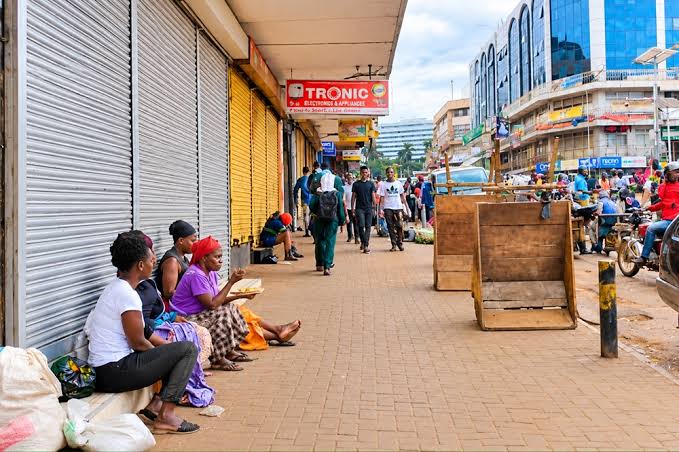
Shops in Kampala's central business district began reopening late last week after a three-day strike by traders protesting taxation, customs delays and enforcement by the Uganda Revenue Authority (URA). The government offered a set of commitments: a review of the tax policy on imported textiles and garments, the release of compliant traders' goods within three days, and a revenue harmonisation committee chaired by the Prime Minister.
The traders have not declared victory. Kampala City Traders Association (KACITA) chairperson Hajji Issa Sekitto said some members had reopened while others were waiting to see whether the promises would be kept. 'We shall wait a little longer and see what comes out of the engagements,' he said. The outcome now depends on a run of meetings scheduled for this week.
How the shutdown unfolded
KACITA called for a month-long nationwide closure starting Tuesday, 17 November, after talks with URA broke down. A meeting on 10 November at URA Tower in Nakawa never got under way. It was meant to cover textile taxation, smuggling, goods moved by bus, cargo delays and enforcement of the Electronic Fiscal Receipting and Invoicing Solution (EFRIS). URA had required participants to surrender their phones, citing intelligence that some people planned to disrupt the meeting. Traders said they had not been warned. URA said it 'sincerely regrets the disruption and condemns the hired disruptive elements'.
By the morning of 17 November, shutters were down at Mini Price, Qualicel Bus Terminal, Kampala Road, Park View Arcade and Skylight on Nabugabo Road, and traders sat outside their locked premises. The strike was not universal. Shops at Mutaasa Kafeero Plaza, Pioneer Mall, Royal Complex and City Base Plaza stayed open after their associations advised members not to join. The National Enterprise Traders Association (NETA) favoured continued dialogue. Its chairperson, Thadeus Naggenda, argued that constructive talks should come before a strike. The Uganda Landlords and Kwagalana Association also declined to back the action. Its chairman, Godfrey Kirumira, warned that rent, salaries, loans and utilities would keep accruing while shops stayed shut.
What the traders want
The grievances go well beyond a single tax. Traders complain that goods are held for weeks or months while storage and demurrage charges build up, sometimes after duty and shipping have already been paid. They object to the impounding of containers and trucks, including goods in transit from Kampala to upcountry towns. They also say customs valuations exceed what importers actually paid. They oppose taxes on textiles imported through Kenya and Tanzania and the policing of goods moved by bus, and they say compliance costs under EFRIS keep rising.
A key flashpoint is groupage, the practice of several small traders sharing one container. URA now requires each importer in a consolidated shipment to hold their own documents and clear goods under their own Taxpayer Identification Number. Traders say this, along with changes to the PB4 and WT8 clearance processes, has made importing slower and more expensive. Some also accuse foreign nationals running retail businesses downtown of squeezing out local entrepreneurs. Federation of Uganda Traders Associations (FUTA) president John Kabanda told Parliament's Trade Committee that 'some containers have been held at URA for months, others for almost a year'.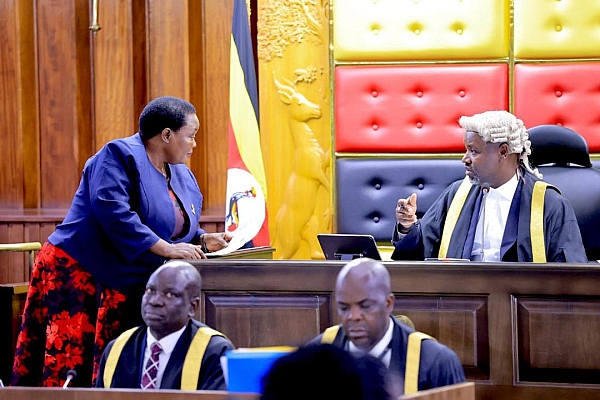
The government and URA's case
Officials have defended the tax authority's approach while conceding that the system needs fixing. On 15 November, Secretary to the Treasury Ramathan Ggoobi disputed claims that goods sit at the Nakawa customs facility for up to eight months. 'Goods don't remain for eight months unless there's an unresolved tax assessment or compliance gap,' he said. He asked traders to bring specific cases and offered to intervene personally where URA was at fault.
URA argues that the individual-clearance rule, which Commissioner General John Musinguzi defended in May 2025, protects small importers from intermediaries and stops them waiting on group members to pay. It says customs controls are needed to curb evasion, smuggling and revenue leakage. In Parliament, Prime Minister Robinah Nabbanja said government had lost revenue because some traders under-declared goods. She said others offloaded goods in Kenya, paid tax there, and moved them into Uganda by bus as small parcels.
The deal on the table
Talks moved quickly once the shops closed. State Minister for Finance Henry Musasizi convened a URA–KACITA meeting at the Finance Ministry. The Prime Minister held sessions with traders, sector ministries and URA on 17 and 18 November, though her first meeting ended without agreement because she had yet to consult the President. On 19 November, Nabbanja told Parliament that President Museveni had asked traders to suspend the strike while government worked on their grievances.
She said the dispute 'largely concerns the tax policy on textiles and garments', specifically the per-kilogram tax on garments intended to protect local producers. That policy will be reviewed and aligned with other East African Community partner states. A revenue harmonisation committee chaired by the Prime Minister will bring together the Ministers of Finance, Trade and Public Service and the URA Commissioner General. On held goods, she said: 'Traders who meet the applicable compliance should pay the requisite taxes and have their goods released within three days.' She added: 'We do not want a repeat of strikes in the city.'
Why it matters now
The timing is sensitive. The shutdown hit just as the festive season, when many traders do much of their year's business, was getting under way. It also comes as the wider economy is under strain. The Bank of Uganda raised its Central Bank Rate by 225 basis points to 12 per cent in October and held it there in November. Governor Michael Atingi-Ego has warned that the oil export revenue once expected in 2026/27 will not arrive this financial year. The shilling swung from about 3,700 to 4,100 to the dollar before recovering somewhat. Lending rates averaged 17.4 per cent in the quarter to September.
For the state, the stakes are revenue. Customs and domestic taxes from trade are central to financing the budget at a time when oil money has been pushed back. For traders, the stakes are survival in a high-cost environment. The dispute closely mirrors the April 2024 strike over EFRIS and taxation, which also ended with presidential intervention. The repeat suggests the underlying tensions over how URA assesses and enforces trade taxes were not resolved then.
What to watch this week
Several meetings fall this week. Cabinet was due to discuss the textile tax paper on Monday, 23 November, and President Museveni was scheduled to meet URA the same day. Government has promised to meet the traders on Tuesday. Deputy Speaker Thomas Tayebwa has asked the Prime Minister to report back to Parliament on Wednesday, 25 November. The clearest early measure will be whether held consignments are actually released within the promised three days. KACITA has suspended the strike but not abandoned it, so a slow or partial follow-through could bring the shutters down again before Christmas.