Economic & Social Transformation
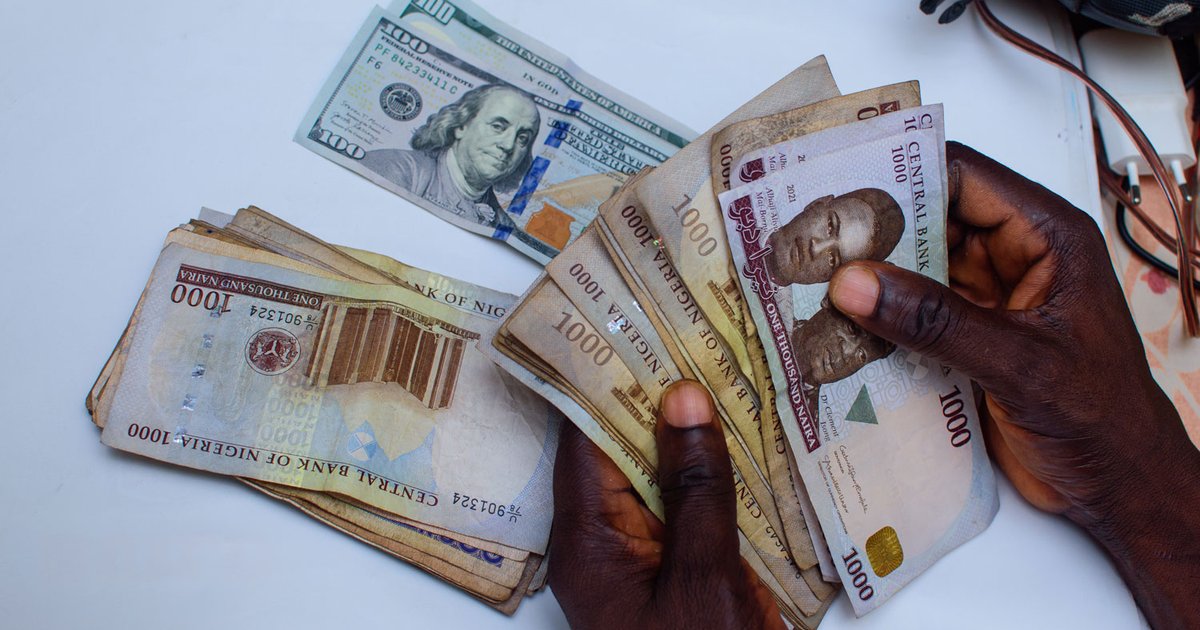
Money sent home by Africans living abroad is now one of the continent's largest and steadiest sources of foreign exchange. According to the International Fund for Agricultural Development (IFAD), Africa received US$124.2 billion in remittances in 2025, up 86 per cent over a decade, and Egypt overtook Nigeria as the continent's largest recipient. Globally, migrants sent US$728.6 billion to low- and middle-income countries in 2025, more than four times official development assistance. For many African economies, diaspora transfers now exceed foreign direct investment and rival export earnings from their biggest commodities.
Yet 2026 has exposed a striking divergence. In Egypt and Nigeria, recorded inflows are hitting all-time highs month after month. In Morocco they are growing steadily. In Kenya and Ghana they are flat or falling. The same year brought the first US federal tax on outbound remittances, a weaker US labour market for some migrant groups, and a Gulf conflict that unsettled labour markets in the Middle East. This article argues that the divergence is explained less by what happens in sending countries than by two features of the receiving economies: whether their exchange-rate regime gives migrants a reason to use formal channels, and how concentrated their diaspora is in a single corridor.
The new US remittance tax: a small rate with an uneven bite
From 1 January 2026, the United States levies a 1 per cent excise tax on remittance transfers funded with cash, money orders or similar instruments. Transfers funded from a US bank account or a US-issued debit or credit card are exempt. The rate was cut from 3.5 per cent in the original House proposal. Before implementation, the Center for Global Development estimated that the tax could reduce remittance volumes by about 1.6 per cent, with the largest absolute losses for Nigeria (around US$168.2 million), followed by Egypt (US$54.15 million), Kenya (US$38.11 million) and Ghana (US$33.63 million).
These are modest numbers next to national totals, and the design of the tax matters: it falls hardest on lower-income senders who rely on cash agents, and it nudges others towards bank-funded digital transfers that are exempt. The real-world data for 2026 suggest that the tax on its own is not decisive. Nigeria, the most exposed country in the CGD modelling, has instead posted record formal inflows. Kenya, much less exposed in dollar terms, has seen a sharp fall in US-sourced money. Something else is doing most of the work.
Egypt: when the parallel market closes, the formal numbers soar
The Central Bank of Egypt reported record remittances of about US$47.3 billion for fiscal year 2025/26 (July 2025 to June 2026), up roughly 30 per cent from about US$36.5 billion a year earlier. Calendar-year data show the momentum continuing: inflows reached about US$33.9 billion in the first eight months of 2026, up 27.2 per cent year on year.
The main driver is not a sudden surge in the number of Egyptians abroad. It is the collapse of the incentive to use informal channels after Egypt unified its exchange rate in March 2024 under its IMF-supported programme. When the official and parallel rates were far apart, migrants in the Gulf and Europe routinely sold dollars to informal dealers. Once the gap closed, much of that money moved into banks. Some analysts note that part of the 2026 increase reflects reclassification of flows that already existed rather than wholly new money. For Egypt's balance of payments the distinction matters less: remittances captured by the banking system support reserves, the pound and the country's ability to service external debt.

Nigeria: reform pays, but the target is ambitious
Nigeria tells a similar story. Central Bank of Nigeria (CBN) data show inflows through international money transfer operators (IMTOs) of a record US$1.29 billion in the first quarter of 2026, up 45 per cent, and about US$1.57 billion in the second quarter, against US$1.18 billion a year earlier. July 2026 set a new monthly record of US$947 million, and seven-month IMTO inflows reached US$3.8 billion, up 50.2 per cent. Governor Olayemi Cardoso has set a target of US$1 billion a month by the end of 2026.
The improvement follows the liberalisation of the naira market, the clearing of foreign-exchange backlogs and revised IMTO guidelines that let operators price closer to market rates. As in Egypt, a narrower gap between official and street rates has pulled money into the formal system. It is worth separating two measures, however. IMTO inflows capture one channel. The broader balance-of-payments series for personal transfers, which includes workers' remittances through all channels, came to US$11.12 billion in the first half of 2026. Reports citing CBN data put total 2025 diaspora remittances at about US$21.8 billion. Hitting a US$1 billion monthly IMTO figure would represent a large shift of activity from informal to formal channels, and that will depend on keeping the exchange rate credible.
Morocco: steady growth from a diversified European diaspora
Morocco's diaspora, known locally as MRE (Marocains résidant à l'étranger), sent more than MAD 122 billion home in 2025. Office des Changes data show transfers of MAD 74.78 billion by the end of July 2026, against MAD 69.17 billion a year earlier, and about MAD 89.2 billion by the end of August, up 9 per cent. Morocco's growth is less spectacular than Egypt's or Nigeria's, but it is more stable. Its diaspora is spread across France, Spain, Italy, Belgium, the Netherlands and the Gulf, and the dirham is managed within a narrow band, so there was never a large parallel premium to unwind. Steady inflows of this kind support the current account and household consumption, especially in rural regions with heavy emigration.
Kenya: the cost of a US-heavy corridor
Kenya shows the downside of concentration. Diaspora remittances reached a record US$5.04 billion in 2025, about 3.7 per cent of GDP, and the US is the single largest source, accounting for roughly 43.5 per cent of cash remittances. In 2026 that dependence turned into a weakness. Central Bank of Kenya data show remittances from the US fell 12.6 per cent to US$1.178 billion in the first half of 2026, a loss of roughly KSh22 billion, while total inflows fell 3.03 per cent to US$2.442 billion. Flows from Saudi Arabia also declined amid the regional conflict. By October 2026, 12-month cumulative inflows had slipped 1.1 per cent to about US$5.02 billion, and the CBK cut its 2026 forecast from US$5.42 billion to about US$5.07 billion.
Kenya has no parallel-market premium to unwind, so it cannot offset external shocks through formalisation as Egypt and Nigeria have done. The US tax, tighter immigration enforcement and softer demand in some sectors that employ Kenyans all hit the same corridor at once.
Ghana: a record year, then a soft patch
Ghana's central bank says remittances reached nearly US$7.8 billion in 2025, about 6 per cent of GDP and more than foreign direct investment. The first half of 2026 was softer: the Bank of Ghana's Monetary Policy Report showed private remittances of US$3.65 billion, down from US$3.93 billion a year earlier. Corridor shifts are part of the story. The United Kingdom's share of inflows fell from 27.6 per cent to 17.5 per cent between the first nine months of 2024 and 2025. The cedi's strong appreciation in 2025 also reduced the local-currency value of each dollar sent, which may have changed the timing of some transfers. Governor Johnson Asiama has responded by proposing to channel diaspora money into investment through diaspora bonds and foreign-currency savings products.
The cost problem that has not gone away
Across all five countries, the cost of sending money remains a drag. World Bank data show that sending US$200 to sub-Saharan Africa cost an average of 8.46 per cent in the third quarter of 2025, against a global average of 6.36 per cent and a Sustainable Development Goal target of 3 per cent. IFAD finds that digital services cost about 4.6 per cent, compared with 7.3 per cent for non-digital ones, but only 35 per cent of services it measured in 2025 were fully digital from sender to recipient. Many transfers still end with a cash pick-up. Because typical transfers are US$300 to US$400, sent nine or ten times a year, every percentage point saved is money that stays with households, three-quarters of which goes on food, shelter and utilities.
What policymakers can learn
Exchange-rate credibility is the most powerful remittance policy available. Egypt and Nigeria show that closing the gap between official and parallel rates can lift recorded inflows by a quarter to a half within a year.
Corridor diversification matters. Kenya's heavy reliance on the US makes it vulnerable to a single country's tax and immigration policy; deeper labour-mobility agreements with Europe, the Gulf and other African economies would spread the risk.
Digital, account-to-account transfers help on two fronts: they are cheaper, and transfers funded from US bank accounts or cards are exempt from the new excise tax. Central banks can encourage this by licensing more mobile-money and fintech partners on inbound corridors.
Investment products need to match migrants' needs. Diaspora bonds have a mixed record in Africa; credibility, small denominations, easy digital purchase and foreign-currency options matter more than headline yields.
Data quality needs work. IMTO series, balance-of-payments personal transfers and household surveys often tell different stories, and policymakers should publish consistent series so that gains from formalisation are not confused with new money.
Conclusion
Remittances have become Africa's most reliable external flow, but 2026 shows they are not a uniform tide. The countries posting record numbers are mostly reaping the dividend of exchange-rate reform, while those with stable currencies and concentrated corridors are more exposed to shocks abroad, including the new US tax. The next gains will come from lowering costs, diversifying where migrants work, and turning family transfers into savings and investment, while recognising, as IFAD stresses, that private family money cannot substitute for public investment and social protection.
Published By | News Editor