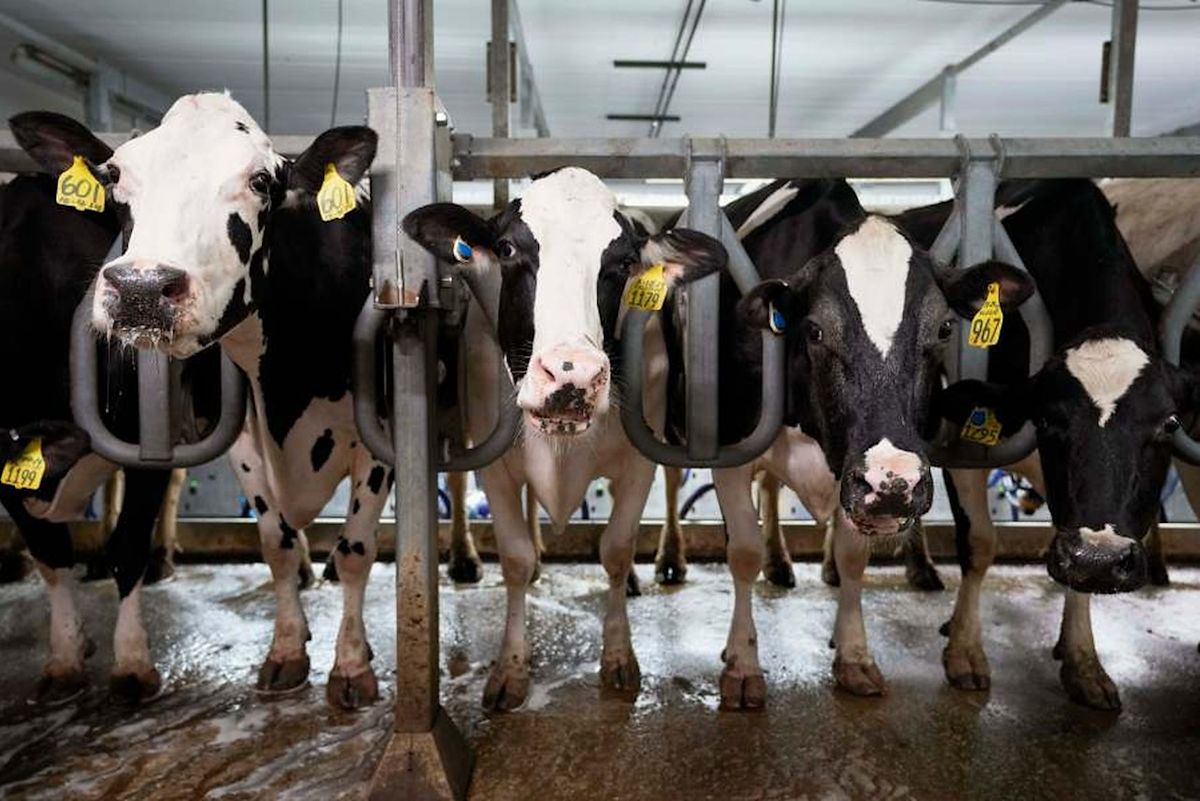
BIRD FLU ALERT
Three Yakima County farmhands infected, one dead in a global first. WHO says the danger to the public is low, but the virus is tearing through cattle herds and nobody has said how many workers have been tested.
GENEVA / YAKIMA, Wash.
It started with itchy eyes and a runny nose. It ended, for one Washington dairy worker, in a hospital bed and a death certificate.
The World Health Organization has formally put the world on notice about a cluster of bird flu infections among dairy farmhands in Washington State's Yakima Valley, confirming that one of them is the first person anywhere on Earth known to have died after catching H5N1 from infected dairy cattle or their contaminated surroundings.
In a Disease Outbreak News bulletin dated November 24, 2026, the UN health agency said the United States had notified it of three laboratory-confirmed human infections with influenza A(H5) between October 16 and November 4. All three patients were adults who worked on dairy farms in Yakima County. One of them, a person with underlying medical conditions, died on November 1. "These included one fatal case, the first reported death following exposure to infected dairy cattle or a related contaminated environment," WHO wrote.
For more than two and a half years, the cow version of bird flu has been treated by many Americans as a strange farm story: sick cattle, dumped milk, a few farmworkers with pink eye. The Yakima death has changed the tone of that story.
A Quiet Valley, a Sudden Outbreak
Washington had been clean. The Washington Animal Disease Diagnostic Laboratory ran more than 7,000 bird flu tests over two years, and every one came back negative until early October, according to reporting by the Washington State Standard.
Then, on October 8, 2026, the virus was confirmed in cattle at two Yakima County dairies. It spread fast. By the end of October, U.S. Department of Agriculture confirmations showed 40 infected herds in Washington, 39 of them in Yakima County and one in neighboring Benton County, according to Medical Daily's tally of USDA data. Six new herds were confirmed on October 30 alone. That surge made Washington the state with the fifth-highest number of infected herds since the cattle outbreak began in 2024.
Genetic detective work points to a cross-border source. Whole-genome sequencing of virus from the first two infected Washington herds found genotype B3.13, the same lineage behind most of the U.S. dairy epidemic. WHO, citing USDA, said the detections were "consistent with introduction of the virus from Idaho State, likely through cattle movement." In other words: the virus probably rode in on cows.
Patient One: Itchy Eyes and Aching Muscles
The first human case reads like a textbook example of how dairy flu usually behaves. According to WHO, symptoms began on October 5, 2026, with eye irritation, a runny nose, muscle aches and headache. The worker sought medical care on October 12 and was offered the antiviral drug oseltamivir, better known by the brand name Tamiflu.
Swabs were taken from the eye and the back of the nose. At the Washington State Public Health Laboratory, the eye swab tested positive for influenza A(H5) on October 14. The CDC later confirmed it was H5N1. The patient was never hospitalized.
That eye-first pattern is familiar. Milking parlors are wet, splashy places, and infected cows shed huge amounts of virus in their milk. A spray of contaminated milk to the face is thought to be one of the most direct routes into a human body, which is why conjunctivitis, or pink eye, has been the signature symptom in many U.S. dairy-linked cases.
Patient Two: The One Who Did Not Come Home
The second case was very different. WHO says this patient had underlying medical conditions and began experiencing respiratory symptoms in the week ending October 24. The following week they went to an emergency department, were admitted with severe illness, and died on November 1, 2026.
A respiratory sample first produced a presumptive H5 result at the University of Washington, which identified the virus as H5N1. The state public health laboratory confirmed the H5 result using the CDC's test.
The Yakima Health District, which first reported the case as a severe hospitalization on October 31, declined to release the person's name, age or gender "out of respect for the family's privacy."
"While this is a serious and heartbreaking outcome, the risk to the general public remains low," said Dr. Dave Atteberry, health officer for the Yakima Health District.
Atteberry also warned: "Avian influenza can cause severe illness, particularly among people who have underlying health conditions."
Washington Governor Bob Ferguson posted on X: "My deepest sympathy to this individual's family." He added: "I'm being briefed on this situation, and my team is in close coordination with public health and agriculture officials."
Patient Three: Pink Eye, No Hospital
The third worker developed conjunctivitis and sought care. Specimens from the week ending October 31 tested positive for H5 at the Washington State lab and were sent to the CDC for further testing. This person did not need to be hospitalized.
WHO says it is "not known if the cases worked on the same farm." Close contacts of all three are being monitored, but the agency added that "additional information on the number and type of contacts being followed was not available at the time of publication."
Not the First American Death, But a Grim First
To be clear, this is not the first time bird flu has killed someone in the United States. A Louisiana resident died of H5N1 in January 2025 after exposure to backyard birds, and a Grays Harbor County, Washington, resident died in November 2025 of H5N5, the first human H5N5 infection ever recorded, according to Contagion Live and Medical Daily. That patient kept a backyard flock.
The Yakima death is the third U.S. bird flu death since 2024 and the first in 2026. What makes it historic is the source. WHO calls it the first death reported globally following exposure to infected dairy cattle.
That matters because the dairy outbreak is enormous. Cattle herds in at least 21 states have now been hit since 2024. On November 2, USDA announced the first detection in Indiana dairy cattle, two connected herds in Newton County found through routine milk testing. And the human count keeps creeping up. As of November 20, 2026, WHO says a total of 75 human cases of influenza A(H5) had been reported in the United States since 2024, including the three Yakima cases.
The Testing Black Hole
Here is the part that worries critics most: nobody seems to know how many dairy workers have actually been tested.
Medical Daily reported that neither the Yakima Health District, the Washington State Department of Health, nor the CDC has published a count of dairy workers tested since the outbreak began on October 8. A state health alert dated October 26 said local health departments were monitoring workers for symptoms and that testing was available through state public health labs, but it gave no totals.
Nationally, CDC monitoring data cited by the outlet showed that from February 2022 through late September 2026, at least 33,300 people were monitored after exposure to infected animals, but only about 1,340 were tested for novel influenza, roughly one in 25.
Earlier research suggests cases are being missed. A 2024 CDC blood study of 115 dairy workers in Michigan and Colorado found that eight of them, about 7 percent, had antibodies showing a past infection. Only four of those eight remembered being sick at all.
Washington's Department of Labor and Industries is now inspecting two Central Washington dairies where the worker who died had been employed, KOMO News reported on November 18. L&I said employees working with poultry, dairy cows or other potentially infected animals should be trained and required to use protective equipment.
Expert Perspective: What the Scientists Are Saying
WHO's official verdict is calm but pointed. "WHO assesses the risk to the general population posed by A(H5N1) viruses as low," the agency said. For people who work with infected animals, the risk is rated "low to moderate."
Crucially, "there is no evidence of human-to-human transmission," WHO said, adding that "to date, human-to-human transmission of influenza A(H5) viruses has not been identified in the United States."
A CDC spokesperson said in early November that the genetic analysis found "no changes that would make the virus spread more easily or cause more severe illness," according to an Associated Press report cited by Medical Daily.
Still, public health experts have long warned that every new human infection is another roll of the dice. Influenza viruses mutate constantly, and each time H5N1 replicates inside a person, there is a small chance it picks up changes that help it latch onto human airways. That is why scientists watch dairy cases so closely: cows are mammals, the virus is replicating in mammals at massive scale, and the people closest to those animals are the frontline.
WHO also flagged an uncomfortable fact. There is no licensed human H5 vaccine "readily available" for the public, and ordinary seasonal flu shots are "unlikely to provide protection" against H5N1. Health officials do say a seasonal flu shot is still worth getting, because it lowers the chance of someone being infected with human flu and bird flu at the same time, a mixing scenario that scientists fear could help the virus swap genes. The agency is not recommending any travel or trade restrictions.
What This Means for You
For the vast majority of readers, the message is: do not panic, but do pay attention. Drink pasteurized milk only. WHO is blunt: "consumption of raw or unpasteurized milk and raw milk products should be avoided." Pasteurization kills the virus, and pasteurized milk and dairy products are considered safe. Health officials also warn against feeding raw milk to pets, since cats in particular have died after drinking contaminated raw milk during the U.S. outbreak.
Cook eggs and poultry thoroughly. Properly cooked food is not considered a risk.
If you work with cattle or poultry, gear up. Health officials recommend disposable coveralls, hair coverings, gloves, masks, safety goggles, and rubber boots or boot covers. Goggles are especially important given how many cases start in the eyes.
Know the warning signs. Fever or chills, cough, sore throat, muscle aches, red or irritated eyes and difficulty breathing after contact with animals should prompt a call to a doctor. Tell them about the animal contact. Yakima County residents can contact the Yakima Health District at (509) 480-3770. The CDC advises monitoring exposed people for up to 10 days after their last contact with infected animals.
Get treated early. Antivirals such as oseltamivir work best when started quickly, and the first Yakima patient was offered the drug within a week of falling ill.
The Bottom Line
The Yakima Valley cluster is small: three people, one tragic death. The risk to the average family in Seattle, Chicago or London remains low, and there is still no sign the virus is passing from person to person.
But it is also a warning shot. A virus that was once a disease of wild birds and chickens has settled into American dairy cattle, crossed into at least 21 states' herds, infected 75 people in the U.S. since 2024, and has now killed a dairy worker for the first time anywhere in the world.
How big the human toll really is may depend on a number nobody has yet published: how many farmworkers have been tested. Until that number is known, the people milking America's cows are the canaries in the barn, and one of them has just died.
Published By | Features Editor